
If you live in Northern Colorado, you’ve probably felt it already. You call for a home remodel quote and the number comes back higher than you expected. Then the schedule is farther out than you hoped. It can feel like planning a simple update turned into planning a small expedition.
The good news is that 2026 home remodeling prices aren’t random. They follow a few predictable forces: labor, materials, timing, and risk. Once you understand those, bids for your home renovation start to make more sense, and your budget gets easier to control.
Here’s a simple example of renovation vs remodel in action. Two neighbors can remodel “the same kitchen” and end up with quotes that are tens of thousands apart. One keeps the layout, picks stock cabinets, and chooses a standard tile. The other moves plumbing, wants custom cabinets, and falls in love with a specialty range that needs a long lead time. Same room, very different story.
This guide breaks down what’s driving prices in 2026, how to ballpark a budget, budgeting tips, and how to avoid the surprise costs that sink plans.
The Big Forces Shaping 2026 Home Remodel Prices In Northern Colorado

In Northern Colorado, home remodeling costs in 2026 are shaped by a mix of things you can control and things you can’t. The trick is knowing which is which.
You can’t control local home renovation market factors like the labor market, insurance costs, or how busy contractors are during peak seasons. You also can’t control when a specific product gets delayed, or when a manufacturer changes a line.
You can control your scope, your selections, and how quickly you make decisions. You can also control how clearly the work is defined before anyone swings a hammer.
Seasonal demand still matters, too. When homeowners in Fort Collins, Loveland, Windsor, and nearby areas all want work done in the same window (often spring through early fall), good crews get booked first. That doesn’t mean winter is always “cheap,” but it does mean schedule flexibility can help.
For a broader view of where the industry is headed, it helps to read an outlook piece like the 2026 remodeling industry outlook. Even though it’s not Northern Colorado specific, it explains why some pressures are sticking around.
Labor Is Still The Biggest Line Item, And Schedules Affect Price
Most homeowners focus on tile, cabinets, and countertops. Contractors often focus on labor first, because that’s the hardest part to scale quickly.
Skilled-trade shortages don’t just mean higher hourly rates. They can also show up as:
- More “management time” built into bids (coordination, site supervision, scheduling).
- Higher insurance and compliance costs.
- Overtime when a project has a tight deadline, or when trades have to stack on top of each other to catch up.If you ask for a kitchen remodel to start next month, a contractor may need to reshuffle crews, pay overtime, or bring in more expensive subcontractors to hit your target. That urgency can raise the price, even when the scope stays the same.A simple tip that often saves money: plan earlier than you think you need to. If you start design and selections with a professional contractor while you’re still in the “dreaming” stage, you have more control over start dates and fewer rush fees.
Materials, Shipping, And Product Choices Can Swing A Bid Fast
Material costs aren’t just about the raw cost of wood or tile. It’s also about availability, shipping, and how many parts have to line up on time.
In 2026, homeowners still see big swings from:
- Cabinetry: stock vs semi-custom vs full custom, plus hardware and interior organizers.
- Countertops: quartz, granite, engineered stone, edge profiles, fabrication, and seams.
- Flooring: LVP, engineered wood, site-finished hardwood, and matching stair parts.
- Windows: sizing changes, egress requirements, and the cost of trim and flashing.
- Tile: large formats need flatter walls and more labor, specialty tile can waste more.
- Appliances: panels, ventilation, electrical upgrades, and long lead times.Hidden risk: discontinued or backordered items. If your tile gets discontinued after you approve it, you might pay for a last-minute substitute, plus extra labor to re-plan layouts or re-order trims.The main takeaway is simple: the same room with different interior design choices and modern finishes can be a totally different budget. That’s why detailed allowance lists matter (more on that in a minute).
A Simple Way To Estimate Your Remodel Budget Before You Call A Contractor
 Photo by Tima Miroshnichenko
If remodeling prices feel like fog, your job is to clarify the project scope and turn the fog into a range. Not a perfect number, just a range you can live with.
Set aside 45 minutes, grab a notepad for visualizing your home, and do this in one sitting. Think of it like packing for a Colorado day. You don’t need to predict the weather perfectly, but you do need layers.
Start With The Scope, Then Pick Your “Must-Haves” And “Nice-To-Haves”
First, name what kind of remodel this really is:
- Cosmetic refresh: paint, flooring, fixtures, maybe counters, same layout.
- Functional upgrade: new cabinets, better storage, lighting plan, some drywall work.
- Layout change: structural changes like moving walls, changing doorways, moving plumbing or gas, new windows.
- Space gain: finishing a basement, bump-out, or full addition to gain living space.Scope drives cost more than style does. Moving plumbing and structure is like relocating a tree instead of trimming it. Both change the yard, but one takes equipment and risk.Now write two short lists: must-haves and nice-to-haves. Keep it tight.Quick checklists to spark design ideas (pick the ones that fit your project):
- Kitchen remodel: layout changes, cabinet type, counter material, lighting, ventilation hood, appliance sizes.
- Bathroom remodel: tub vs shower, waterproofing approach, heated floor, vanity storage, ventilation.
- Basement: bathroom rough-in, egress window, insulation plan, sound control, storage.
- Addition: foundation type, roofing tie-in, HVAC plan, window counts, exterior finishes.Before you call anyone, take photos of the space and write down what’s staying. Contractors can price faster when they know what won’t change.
Use Three Buckets, Build A Range, and Add A Smart Cushion
Now build your estimate using three buckets. The goal is clarity, not perfection.
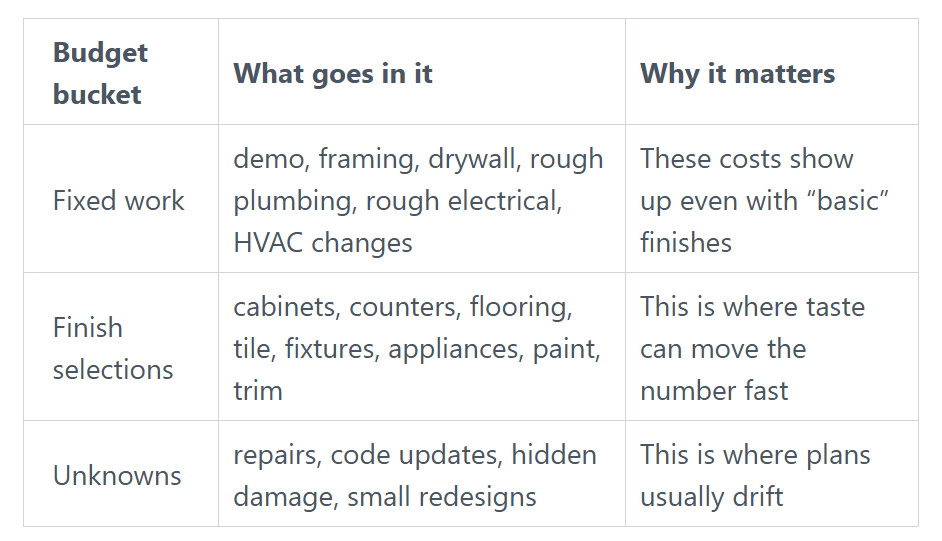
1.Fixed work – demo, framing, drywall, rough plumbing, rough electrical, HVAC changes | These costs show up even with “basic” finishes |
2. Finish selections-cabinets, counters, flooring, tile, fixtures, appliances, paint, trim | This is where taste can move the number fast |
3. Unknowns- repairs, code updates, hidden damage, small redesigns | This is where plans usually drift |
Here’s the simple math:
- Write down your best guess for each bucket (even if it’s rough).
- Create a low and high range for each bucket.
- Add them up into a total low and total high.
- Add a contingency cushion.A reasonable cushion often lands in the 10 to 20 percent range, depending on the home and scope. Use the higher end if your home is older, if you’re moving plumbing, or if you suspect past DIY work behind the walls.Two things make this method work in real life:
- Ask for at least one detailed scope (not just a one-line number).
- Ask for a written allowance list so you can see what finish dollars are assumed
Where Homeowners Lose Money, And How To Keep Your Remodel From Drifting
Most home renovation budgets don’t explode from one huge mistake. They leak, like a slow drip under the sink. In 2026, the most common leaks still come from unclear expectations and late decisions.
You don’t have to become a construction expert to prevent that. You just need a paper trail and a habit of deciding early.
Change Orders, Unclear Allowances, And Late Decisions Are The Usual Culprits
A change order is a written change to the original plan that affects cost, scope, or schedule. Some change orders are your choice (adding a built-in bench). Others are forced (discovering a failed drain line).
The budget trouble starts when the original bid is light on details, so the “changes” are really just missing information. That’s where allowances come in.
An allowance is money set aside for a selection that hasn’t been chosen yet, like a faucet, tile, or light fixtures. A low allowance can make a bid look cheaper, then cost you later when your real selections don’t fit that number.
A short script you can use (and it works well over email):
“Can you confirm what’s included, what’s excluded, and which items are allowances with the allowance amounts listed?”
If the contractor answers clearly and updates the quote, you’re in a safer spot. If the answer is vague, expect surprises.
Permits, Inspections, And “We Opened The Wall” Surprises Should Be Planned For
Building permits can feel like a hassle, but they’re also a layer of protection. They create a record, require code checks including energy efficiency standards, and can help prevent unsafe shortcuts that cost more later.
“Opened the wall” surprises are real, especially in older Northern Colorado homes. Common ones include:
- Outdated plumbing and electrical wiring or overloaded panels
- Old drain lines, incorrect vents, or slow slopes
- Uneven floors that complicate cabinets and tile
- Hidden moisture around tubs, showers, and exterior walls in bathroom remodels
- Asbestos risk in some older materials (testing and safe handling matter)A simple risk checklist that can inform your contingency:
- Home built several decades ago
- Prior DIY project or remodel work with unknown quality
- Signs of past leaks (stains, soft drywall, musty smell)
- You’re changing layout, plumbing, or structural walls
- You want large-format tile or very tight finish tolerances
How to Compare Bids And Choose A Contractor Without Overpaying
When you get multiple bids on your home remodel, it’s tempting to compare the bottom line first. That’s human. But a remodel quote is more like a recipe than a receipt. If two cooks aren’t using the same ingredients, the totals won’t mean much.
The cheapest bid can turn into the most expensive project when it leaves out steps, assumes bargain finishes, or pushes important work into change orders.
Look For Scope Clarity, Not Just The Bottom-line Number
A solid bid usually includes:
- A detailed scope of work (what’s happening in each area)
- Selection assumptions (what brands or quality level is assumed)
- Allowances listed with dollar amounts (e.g., for a freestanding tub)
- A realistic timeline and start window
- Payment schedule tied to milestones
- Warranty details
- Who, as a licensed professional, manages subcontractors and who is your day-to-day contactIf something is unclear, put questions in writing and ask for a revised quote after answers. Clear paperwork reduces misunderstandings on both sides. For bigger scopes, a solid bid may also touch on financing home improvements, such as through a personal loan or home equity.
Ask About Schedule, Communication, And What Happens When Prices Change
Use a short set of direct questions. Five to seven is enough.
- What’s the realistic start window and project duration?
- Who is my main contact, and how often will I get updates?
- How do you handle allowances if selections cost more or less?
- What happens if a product is delayed or discontinued?
- Do you have a written change order process, and when is it required?
- How are permits and inspections handled, and what’s included in the price?
- If material prices change, what’s your policy (and where is it written)?You’re not trying to “catch” anyone. You’re trying to make the plan sturdy enough to survive real life.
Conclusion
2026 home remodeling prices feel less confusing when you break them into four parts: labor, materials, scope, and risk. Once you see those drivers, you can read a bid like a map instead of a mystery novel.
Plan early, write down your selections (or at least your finish level), and keep a contingency that matches your home’s age and the amount of change you’re making. Clear allowances and timely decisions do more for your budget than any bargain hunt.
Next step: gather photos of your space, list your must-haves, and note what you won’t change. Then talk with a pro about your home renovation when you can describe the scope in plain words. Your home remodel will still be an investment, but it won’t feel like a gamble.