
Colorado yards have a special kind of drama. Bright sun, drying winds, sudden heat spikes, and long stretches without rain can turn a “normal” lawn into a weekly chore and a monthly surprise bill.
That’s why xeriscaping keeps gaining fans. In plain terms, it’s water-wise landscaping that pairs smart plant choices with smart design. It’s not “all rocks” and it’s not giving up on a welcoming yard. Done well, it means fewer sprinkler headaches, less mowing, and plants that still look steady when summer gets pushy. These sustainable tips also help you stay ready for the tighter watering rules that many cities and districts use during dry years.
One note before you start: rules and rebates vary by city and water district, and they can change quickly. Always check your local guidance before you rip out turf or adjust watering days.
Start with a simple yard plan that saves water before you buy a single plant
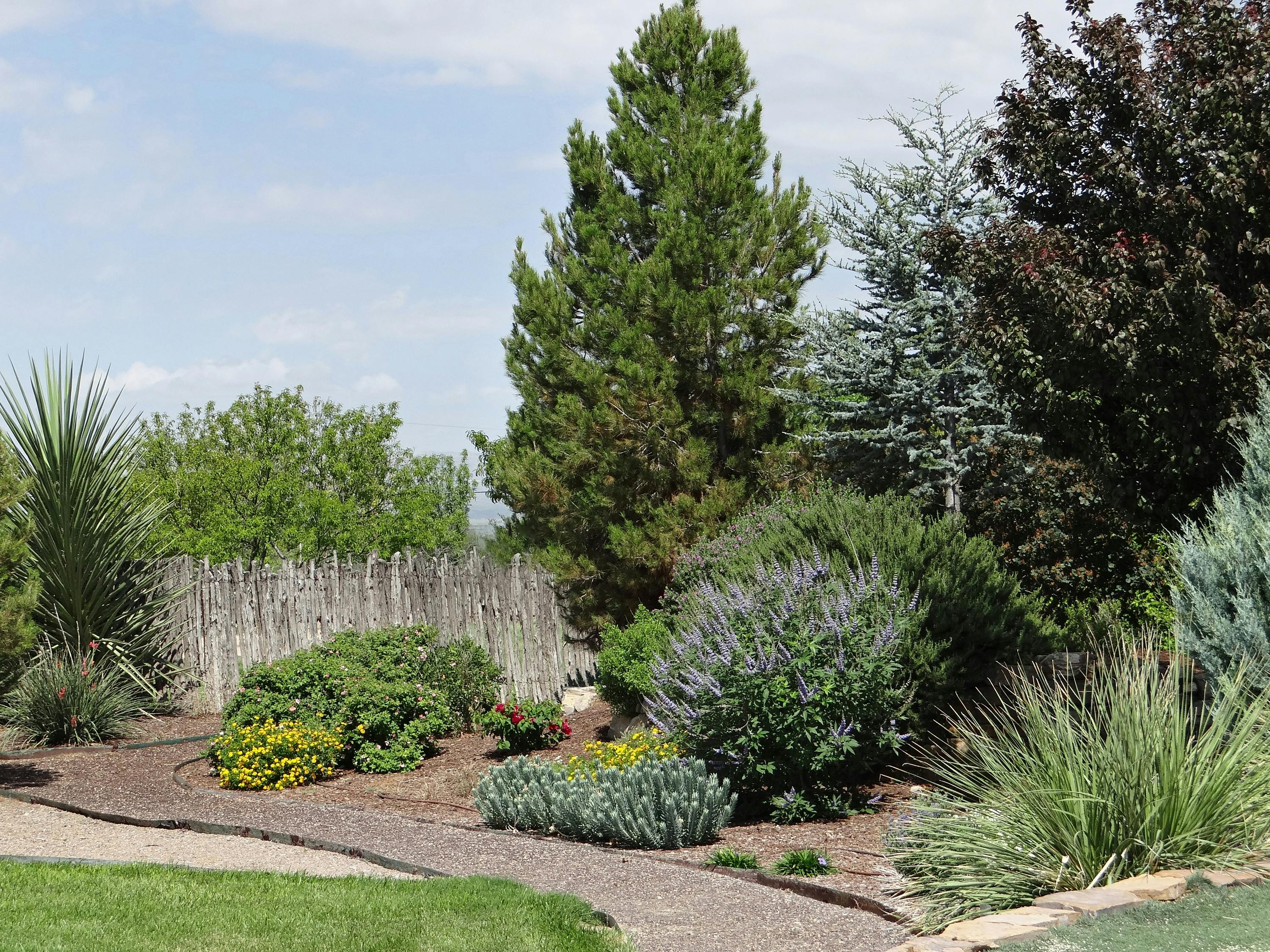 A plan sounds slow, but it’s the fastest way to avoid expensive redo work. Without one, people often plant first, then fight heat stress, runoff, and dead patches later.
Start simple. Measure the yard (even a rough sketch helps). Mark the house, fences, trees, and slopes. Then watch the yard during a normal day and after a good rain or snowmelt. Where does water puddle, and where does it race away?
This step matters because outdoor watering is usually the biggest “flex” in a Colorado water bill. Research and extension guidance often cite that a well-designed xeriscape can cut outdoor use by about 50 to 75% compared to traditional high-water landscapes, especially when you shrink turf and stop spraying sidewalks.
If you want a practical, Colorado-specific refresher on retrofitting an existing yard, Colorado State University Extension lays out smart priorities in Xeriscaping: Retrofit Your Yard.
Photo by Reagan Ross
Map sun, wind, and runoff, then group plants by water needs
Think of your yard like a small neighborhood with different microclimates. The south-facing edge bakes. A corner near the garage stays shaded. Wind roars through a side yard like it’s late for work.
Next, use hydrozoning: group plants by how much water they really need. For example, put “thirstier” plants (like a few favorite flowers or a small vegetable bed) near the hose bib or a drip zone you’ll check often. Put tougher native plants farther out where they can live on less.
A quick mapping checklist helps you place plants once and keep them happy:
- Morning sun spots: gentle light, good for many perennials.
- Hot south-facing edges: bright and dry, perfect for drought-tough choices.
- Windy corners: more evaporation, so pick hardy plants and add mulch.
- Low spots: water collects here, so use it for slightly higher-water plants.
- Slopes: runoff steals moisture, so slow it down.
On slopes, don’t rely on “watering harder.” Instead, slow water with small swales (shallow, wide dips), gentle terraces, or a curved bed edge that catches runoff. Even a subtle change in grade can keep water in the root zone longer.
A good yard plan isn’t fancy. It’s just a map of heat, shade, wind, and where water wants to go.
Shrink the lawn on purpose, keep a soft spot where you use it most
Most people don’t need a full-yard lawn. They need a place to toss a ball, sit on a blanket, or let a dog do zoomies. So keep turf where you’ll actually step on it, then replace the rest with beds, paths, and a small seating area.
If you want grass, choose a low-water option that fits Colorado’s dry summers. Two common picks are buffalo grass and blue grama. They can use less water than thirsty cool-season lawns once established, and they don’t beg for weekly mowing.
Here’s a quick comparison to guide that decision:
| Low-water grass | Best for | Look and feel | Water needs (after established) |
|---|---|---|---|
| Buffalo grass | Sunny yards with lighter traffic | Soft, fine texture | Low, goes tan in drought |
| Blue grama | Sunny yards, native-priority landscapes | Slightly tufted, prairie feel | Low, handles dry spells well |
New grass still needs regular watering while it establishes. Plan for that first-season reality, then taper down to deep, less frequent irrigation.
Choose Colorado-tough plants and build soil that holds onto moisture
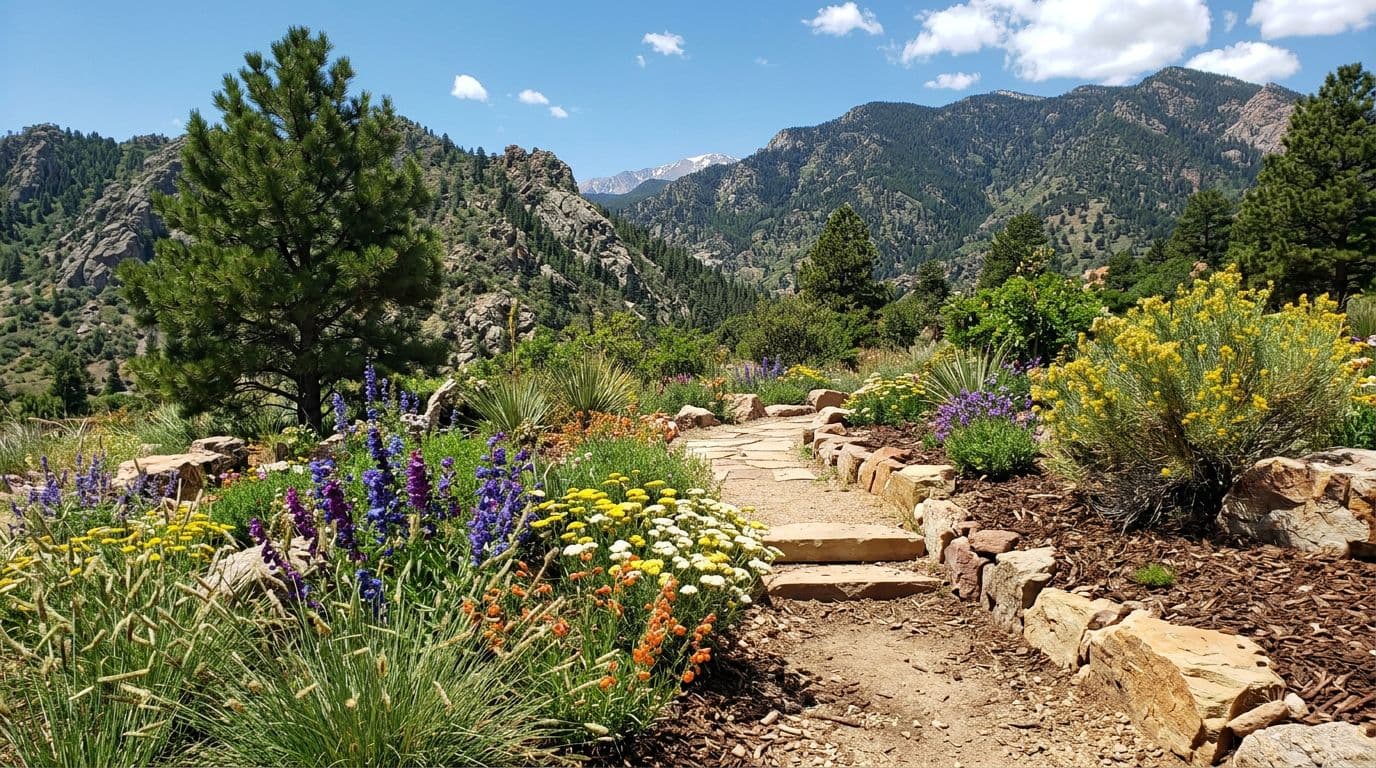 Colorado isn’t one climate. A Front Range yard, a Western Slope property, and a mountain town lot can sit in very different growing zones. Still, the pattern is familiar: strong sun, fast-drying air, and surprise cold snaps.
Plants matter, but soil and mulch often matter just as much. Healthy soil acts like a sponge. It grabs water, then releases it slowly to roots. Meanwhile, a good mulch layer shades the soil so it doesn’t dry out by lunchtime.
If you want inspiration from local native-plant advocates (and a mindset that still values beauty), see Tricks and Tips for Your Xeriscape Garden from Wild Ones Front Range.
A Colorado-style xeriscape with color, texture, and structure, created with AI.
Go-to drought-tolerant plants that look great with less water
A yard can look rich without being water-hungry. The trick is mixing textures: grasses for movement, shrubs for structure, perennials for color, and a few small trees for shade.
Here are reliable, Colorado-friendly picks (native or well-adapted), grouped by type:
- Grasses
- Buffalo grass: soft, low-water turf option for sunny spots.
- Blue grama: prairie-native look, steady through dry stretches.
- Shrubs
- Rabbitbrush: late-season yellow blooms, handles heat and poor soil.
- Apache plume: airy flowers and seed heads, good for dry borders.
- Mountain mahogany: tough, tidy structure, great for slopes.
- Perennials and flowers
- Yarrow: spreads gently, blooms well, handles lean soil.
- Penstemon: hummingbird favorite, strong color with modest water.
- Columbine: classic Colorado look, happier with some afternoon shade.
- Gaillardia (blanket flower): long bloom season, thrives in sun.
- Trees
- Pinyon pine: slow-growing, drought-tolerant, strong character.
- Rocky Mountain juniper: hardy evergreen, good for wind and sun.
Before you buy, check mature size and spacing. Crowded plants compete for water, and they’ll show it in August. Give each plant the room it needs, even if the bed looks “empty” the first season.
Mulch, rocks, and compost, how to use each without cooking your plants
Mulch is like sunscreen for soil. Organic mulch (shredded bark, wood chips) shines in beds and around trees and shrubs. Spread a few inches deep, then keep it pulled back from trunks and stems so you don’t trap moisture against bark.
Rock and gravel can work too, especially for paths or around plants that like heat and sharp drainage. Still, rock reflects and holds warmth. In a hot spell, it can raise stress on nearby plants.
Rock mulch reduces weeding, but it can also turn a sunny bed into a skillet. Use it where heat helps, not where it harms.
Compost helps most when you mix it into planting holes or blend it into a new bed at modest levels. Avoid turning the whole yard into rich, thirsty soil. Over-amending can push lush growth that needs more water to maintain.
Weed barrier fabric sounds helpful, but it often causes long-term trouble. Over time, soil and mulch build on top, weeds root into that layer, and the fabric becomes a tangled mess. In most beds, skip fabric and rely on mulch plus occasional weeding.
Water smarter outside and inside, so every gallon does more
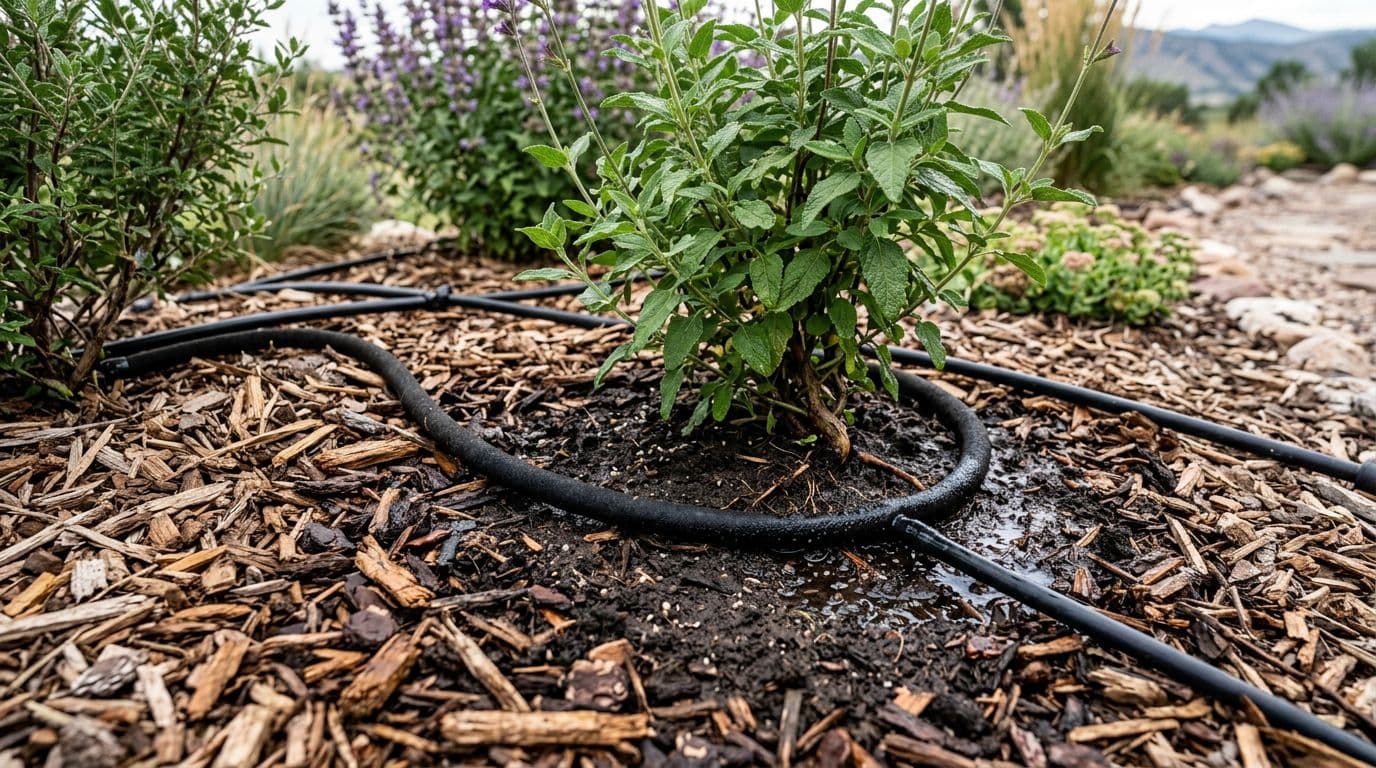
Drip and soaker hoses keep water near roots instead of misting it into the air, created with AI.
In March 2026, many Colorado homeowners are watching drought signals closely. Some Front Range providers have already warned that watering rules could tighten if dry conditions continue into spring and summer. That’s a reminder to focus on what you can control: how you water, when you water, and whether water lands on roots or pavement.
Most watering rules share the same basics. Water early morning or later evening, limit days, and avoid waste. In practice, the “no waste” part is where a lot of savings hide.
Set up irrigation that targets roots, not the sidewalk
Drip irrigation and soaker hoses reduce evaporation because they apply water slowly at soil level. They also help you water only what needs water. That’s the heart of a xeriscape.
Use drip for beds, shrubs, and trees. Use a small sprinkler zone only if you keep a dedicated lawn area. Even then, make sure heads don’t spray the driveway, fence, or street. If they do, you’re paying to water concrete.
Smart controllers can also help. They adjust schedules based on weather and can skip watering after rain. They’re not magic, but they do reduce “set it and forget it” overwatering.
A little maintenance goes a long way:
- Check for leaks at the spigot, valves, and backflow.
- Flush drip lines each season to clear grit.
- Replace clogged emitters before plants show stress.
- Re-aim sprinkler heads so they hit turf, not sidewalks.
Small water habits for 2026 that cut waste fast
Some savings come from a shovel and a plan. Other savings come from tiny habits that compound like spare change in a jar.
Outdoors
- Water only when the soil is dry a couple inches down.
- Mow higher so grass shades its own roots.
- Water during cooler parts of the day to cut evaporation.
- Use rain barrels (Colorado has allowed up to two 55-gallon barrels statewide since 2016).
- Hand-water new plants during establishment, then taper down.
Indoors
- Fix leaks fast, because drips add up quietly.
- Install WaterSense-labeled fixtures when you replace old ones.
- Run full loads in the dishwasher and washer.
- Take shorter showers, even by a few minutes.
- Turn off the tap while brushing and shaving.
Indoor changes won’t replace outdoor savings in summer, but they still matter. Research often finds indoor efficiency can reduce total household use by about 20 to 30%, depending on what you replace and how consistent you are.
Rebates, local rules, and a quick timeline to make the switch without stress
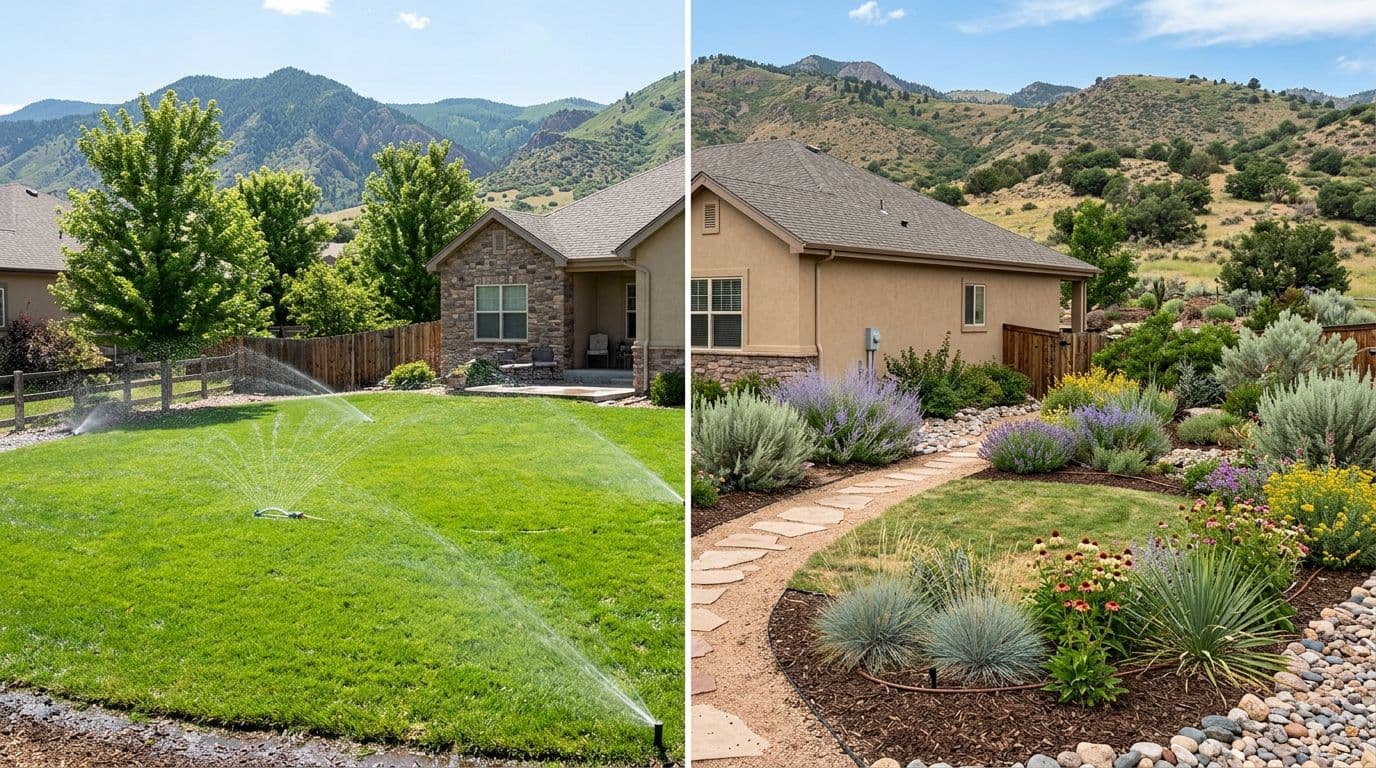
A side-by-side look at how turf reduction and smarter watering can change a yard, created with AI.
Xeriscaping feels easier when you treat it like a remodel, not an overnight flip. In addition, rebates can turn “maybe later” into “let’s do it.”
Just don’t assume your neighbor’s rules match yours. Even nearby towns can have different watering days, enforcement, and rebate requirements. In dry years, cities may step through staged restrictions that reduce how often lawns can be watered.
Where Colorado homeowners often find cash back for water-saving upgrades
Many rebates focus on upgrades that produce steady savings:
- Turf removal and water-wise landscape conversions
- Smart irrigation controllers
- Drip upgrades and high-efficiency sprinkler heads
- Rain barrels
- High-efficiency toilets and some indoor fixtures
Denver Water is a common example of a utility that offers conservation programs, and many other districts run their own. In Fort Collins, the city’s Xeriscape Incentive Program (XIP) is a good example of how local programs can support design, installation, and education.
Before you buy anything, search your water provider’s rebate page and read the fine print. Many programs require pre-approval, specific product models, or photos before and after.
A weekend-to-weekend plan: what to do first, next, and later
You don’t need a perfect master plan to start. You need a calm sequence.
Week 1: Quick audit
Measure turf, fix leaks, and run sprinklers for five minutes to spot overspray.
Weeks 2 to 4: Remove a slice of turf
Pick the least-used turf first (side yards, narrow strips, steep slopes). Build one new bed, then mulch it well.
Month 2: Upgrade irrigation
Add drip to the new bed, and adjust your controller. Water deeply, then let soil dry slightly between cycles.
Later in the season: Add long-term shade
Plant a well-placed tree, then expand beds outward over time. Shade cools soil and can reduce water demand in nearby areas.
Plan for establishment watering in the first season. After that, taper down gradually so roots learn to go deeper. Small changes still move the needle, especially when you stick with them through July and August.
Conclusion
Colorado xeriscaping works best when you plan first, plant tough, improve soil, and water with intention. You’re not trading beauty for gravel, you’re building a yard that stays comfortable in dry years and doesn’t demand every weekend.
Pick one change to do this week, like fixing a leak or mulching a stressed bed, then build momentum as the season warms up. By late summer, you’ll feel the difference every time you look outside and the yard looks back like it can handle whatever comes next.
Ready to make your Colorado yard thrive while saving water?
Download our free 2026 Xeriscape Checklist, join our newsletter for seasonal tips on home maintenance and so much more!